
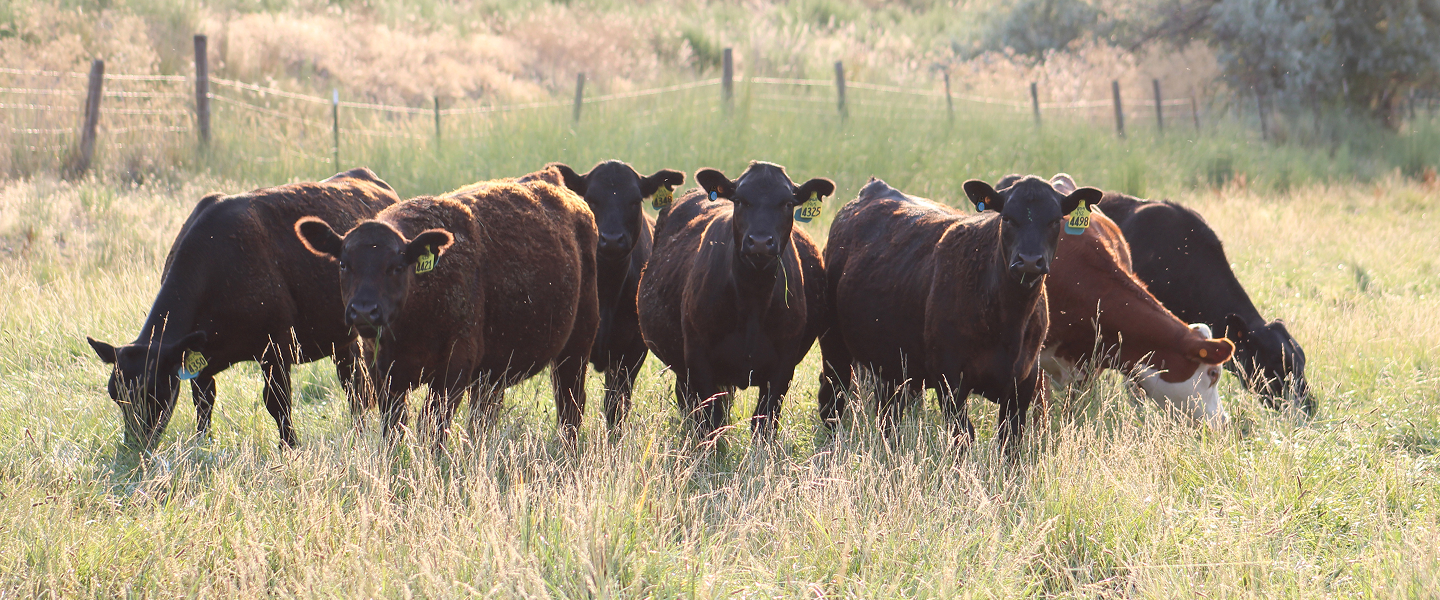
97 Cattle Ranch uses Heat Synchronization in Cattle to Bring More Pounds to Sale
For a commercial cow-calf operation, getting more cows bred earlier can pay dividends long after the breeding season ends. A tighter calving window means a more uniform calf crop which translates to more pounds in the truck on sale day and more dollars in the producer’s pocket. At 97 Cattle Ranch, Luke Osborn has seen those benefits firsthand by using heat synchronization in his cattle herd.
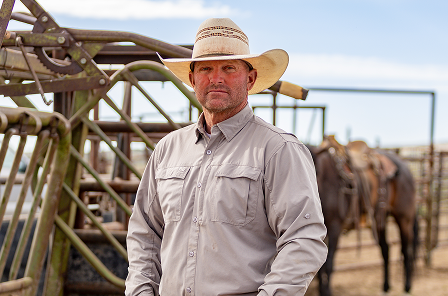
From breeding challenges to better results
Osborn developed his passion for raising cattle by helping his uncles before purchasing his own herd. He started with approximately 100 head and has continued to build the operation alongside his family.
97 Cattle Ranch is nestled in the southern end of the Utah Valley. Raising cattle in high desert country means they utilize different grazing locations as the seasons change. Seasonal movement makes reproductive efficiency a critical part of the success of their operation. In 2018, while cattle were grazing in the mountains, a fire forced the operation to stay on the move for about 45 days. When fall hit, the disruption on the herd was evident.
“We had a lot of cows that were late bred, and we probably doubled our open rate,” Osborn said. “We were kind of scattered out and it was a mess.”
The difficult fire season led to a high number of open cattle and a long, spread-out calving season. Osborn was looking for a solution to get back on track without losing a large portion of his herd. He decided to implement a different protocol for heat synchronization in his cattle — giving one shot of ESTRUMATE® (cloprostenol injection) at bull turnout to tighten the breeding window.
Since implementing the ESTRUMATE protocol in 2018, Osborn has seen its positive impacts compound year after year. What started as a way to overcome fire season is now an important part of the operation’s breeding strategy.
Improving management strategies with one shot
The 97 Cattle Ranch breeding strategy follows the recommended natural service heat synchronization protocol. When breeding season begins, bulls that have passed a Breeding Soundness Exam (BSE) are turned out. For Osborn, this starts in mid-May. Five days later, cows are gathered and run through the chute for spring turnout processing, which includes giving one shot of ESTRUMATE.
The goal is to bring more cows into heat during a narrower breeding window, producing a more uniform calf crop and efficiently allocating labor during a condensed calving window. Osborn noted the cows are in a closer area during the month of May, so bulls have an easier time covering all the cows. Later, cows are dispersed on the mountain and can be harder for the bulls to keep up.
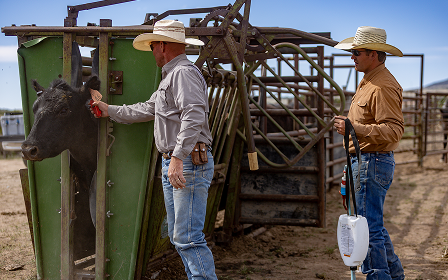
This protocol for estrus synchronization helps Osborn accomplish a much bigger goal — getting cows bred earlier and continuously improving the herd’s reproductive performance. His real-world experience and research data support advantages that include heavier weaning weights in a more uniform calf crop. Research studies show an approximately 20- to more than 40-pound advantage for calves born in the first heat cycle compared to the second or third.1-5 Creating uniformity can yield a $25/head advantage for even calf lots.6 Those advantages have also appeared in Osborn’s herd.
Compounding results one breeding season at a time
These results didn’t appear overnight. Osborn says the operation saw the impact build progressively year after year.
“Within about three years, the majority of cows were calving within two cycles,” Osborn said. “Each year, more cows were pulled into the first cycle and the first 20 to 30 days of calving season instead of stretching into a 60- to 90-day window.”
The tighter calving window has led to several benefits for 97 Cattle Ranch, but the ultimate measure comes in October at sale time. A more concentrated calving season means calves are more similar in age and size at sale time.
“In the end, it’s all about pounds,” Osborn said. “If we can get those calves in a 45-day or 60-day window, those are just older, mature calves come fall.”
Greater uniformity can make the calf crop more attractive to buyers and result in higher returns.
“Since we started heat synchronizing with ESTRUMATE, come shipping time in October, our calves are a lot more uniform with more pounds. And pounds pay.” Osborn said. “The buyer doesn’t have as much to cut back, and more calves go on the truck with more pounds on them. And it’s a huge, huge benefit.”
The Solution: A 24/7 cattle monitoring tool
Incorporating monitoring technology has allowed the operation to keep a close eye on their replacement heifers, even miles away.
A long-term strategy with a big payoff
While heat synchronization requires a bit more labor, Osborn views the work as an investment in the overall productivity of the herd. It’s not just another task during breeding season; it’s a pivotal part of the continued success of their operation.
“I’d definitely recommend people try the program,” Osborn said. “Give it three to five years, and you’re really going to see the difference.”
For 97 Cattle Ranch, that difference has meant steadily bringing more cows into the first cycle, tightening the calving window and producing a more uniform set of calves that pay at sale time.
Optimize Bull Turnout with ESTRUMATE
Heavier weaning weights. A more uniform calf crop. Shorter, more predictable calving and breeding seasons – and cows that stay productive in the herd longer. These are the benefits producers are looking for and they’re possible with a Day 5 PGF protocol and bull-bred herds.
Learn MoreSources
- Cushman, R.A., L.K. Kill, R.N. Funston, E.M. Mousel, G.A. Perry. Heifer calving date positively influences calf weaning weights through six parturitions. J. Anim. Sci. 2013. 91:4486 4491.
- Funston, R.N., J.A. Musgrave, T.L. Meyer, D.M. Larson. Effect of calving distribution on beef cattle progeny performance. J. Anim. Sci. 2012. 90:5118–5121.
- Larson, D. M., Funston, Richard N. “Estrous Synchronization Increases Early Calving Frequency, Which Enhances Steer Progeny Value.” West Central Research and Extension Center, North Platte. 2009. 84.
- Perry G.A., J.C. Dalton. Reproductive management strategies to maximize production with natural service. Applied Strategies in Beef Reproduction 2024 proceedings. 2024.
- Whittier, J. C., R. W. Caldwell, R. V. Anthony, M. F. Smith, R. E. Morrow. Effect of a prostaglandin F2α injection 96 hours after introduction of intact bulls on estrus and calving distribution of beef cows. J. Anim. Sci. 1991. 69(12):4670–4677.
- Tonsor, G.T., D.G. Renter. Merck Final Report. Superior Livestock Auction Sales-Price Analysis: 2025. 2026.
IMPORTANT SAFETY INFORMATION FOR ESTRUMATE®:
Do not administer ESTRUMATE to a pregnant cow unless abortion is desired. Severe localized post-injection clostridial infections have been reported; in rare instances infection has led to death. Women of childbearing age, asthmatics, and persons with respiratory problems should exercise extreme caution when handling ESTRUMATE. ESTRUMATE is readily absorbed through the skin and can cause abortion and/or bronchospasms; direct contact with the skin should be avoided, and accidental spillage on the skin should be washed off immediately with soap and water. For complete safety information, refer to the product label.
US-EST-260800001


 Go To United States
 Algeria
 Argentina
 Australia
 Austria
 Bahrain
 Belgium (Dutch)
 Brazil
 Canada (English)
 Chile
 Colombia
 Croatia
 Czech Republic
 Denmark
 Ecuador
 Egypt
 Finland
 France
 Germany
 Greece
 Hungary
 India
 Indonesia
 Iraq
 Ireland
 Israel
 Italy
 Japan
 Jordan
 Kuwait
 Lebanon
 Malaysia
 Mexico
 Morocco
 Netherlands
 New Zealand
 Norway
 Oman
 Panama
 Peru
 Philippines
 Poland
 Portugal
 Qatar
 Romania
 Russian Federation
 Saudi Arabia
 South Africa
 South Korea
 Spain
 Sweden
 Switzerland (French)
 Taiwan
 Thailand
 Tunisia
 Turkey
 Ukraine
 United Arab Emirates
 United Kingdom
 Uruguay
 Yemen
 Global