
Facing the Threat Together: Industry Aligns on New World Screwworm
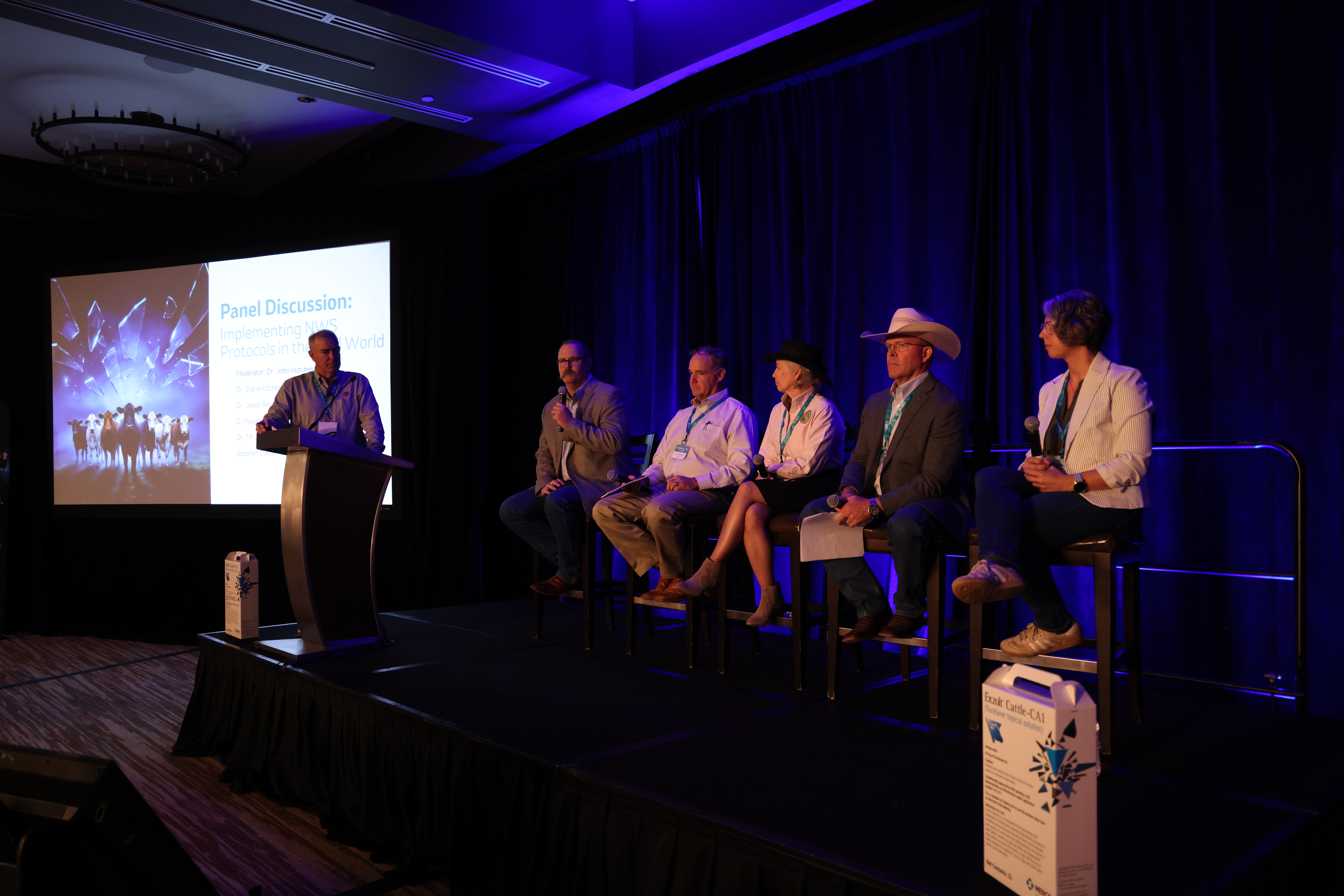
The cattle industry has faced New World screwworm (NWS) before—and won. But as experts emphasized at the recent NWS Symposium sponsored by Merck Animal Health, the threat of this devastating parasite demands renewed vigilance, stronger coordination and a proactive mindset across the entire livestock industry.
Stephen Diebel, a Texas cattle producer and president of the Texas and Southwestern Cattle Raisers Association, pointed to the magnitude of the threat, noting that New World screwworm poses a $12–$14 billion annual economic risk for the state of Texas when both livestock and wildlife are considered. That scale of loss underscores why the issue demands attention, even from producers who may feel geographically removed.
While New World screwworm does not pose a food safety concern, it is an animal health concern and its ability to devastate animal populations is well understood. Infested animals can suffer severe tissue damage, become incapacitated and, if untreated, die. The impact extends beyond cattle, affecting wildlife, companion animals and other warm-blooded species.
That broad host range makes New World screwworm a shared risk and a shared responsibility.
Image courtesy of USDA-APHIS
Understanding the cycle of New World screwworm and why it is a risk
New World screwworm differs from many common livestock pests in a critical way: it targets living tissue. The New World screwworm fly lays eggs in wounds, where larvae hatch and feed on the animal, causing significant pain and often severe damage which can cause organ damage or systemic infections. This infestation of New World screwworm (cochliomyia hominivorax larvae) is known as myiasis.
The adult New World screwworm fly is about the size of a common housefly (or slightly larger), with orange eyes, a metallic blue or green body, and three dark stripes. New World screwworm can be difficult to identify as it resembles other bot fly species. Confirmation of the fly identity can be determined only by a trained individual. If you see suspicious flies, contact your veterinarian immediately.
Even small wounds can serve as entry points. Experts stressed that vulnerabilities can range from something as minor as a tick bite to larger injuries. The umbilical cords of newborn calves are especially at risk. This makes routine management practices—calving, branding and processing—key moments of risk.
Additionally, New World screwworm does not respect geographic boundaries. Because it is a flying insect, it can spread across operations and regions regardless of fences or property lines. This, combined with the national movement of livestock, creates a potential pathway for rapid spread.
Dr. Diane Kitchen of the Florida Department of Agriculture emphasized that while southern climates are particularly conducive to year-round survival of NWS, the risk of outbreak is not limited to those regions. Livestock movement means that animals—and the pests that affect them—can travel far beyond their origin.
“This isn’t just a Southern issue,” was a consistent theme throughout the symposium due to the interconnected nature of the U.S. cattle industry.
The importance of early detection
Across all speakers, one principle stood out above the rest: early detection is the most powerful tool available.
Dr. T.R. Lansford III of the Texas Animal Health Commission framed it simply— “the most important thing we can put on animals for screwworms is our eyes.” Daily observation of livestock, along with awareness of wildlife and companion animals, is essential for identifying wounds and potential infestations early.
That vigilance can make the difference between a manageable situation and a widespread outbreak.
History provides a clear example. During a 2016–2017 outbreak in the Florida Keys, New World screwworm was present for multiple generations in wildlife before being officially reported. By the time authorities who could help were alerted, the parasite had already caused significant damage and mortality, particularly in wildlife populations.
Experts emphasized that producers should err on the side of caution. Even if most cases turn out not to be New World screwworm, early investigation of suspected cases is critical to protecting the broader industry.
Reporting is critical
Despite the importance of reporting, hesitation remains among some producers. Concerns about regulatory consequences or market disruptions can create reluctance.
However, symposium speakers were clear: early reporting enables rapid response. Identifying the location of an infestation allows authorities to implement control measures, including sterile insect techniques, to contain and eliminate New World screwworm before it spreads.
New World screwworm is classified as a foreign animal disease pest in the United States, and reporting suspected cases is a legal requirement for veterinarians, producers and animal caretakers.
Diebel emphasized that strong identification and reporting practices ultimately help safeguard markets. In a time of strong cattle prices, protecting regional and national market access is directly tied to how effectively the industry manages threats like NWS.
New World screwworm preparedness starts on the ranch
While government agencies and cattle industry organizations play a key role in response, preparedness begins at the ranch level to help with infestation prevention.
Producers are encouraged to take a proactive approach by evaluating their operations and identifying potential vulnerabilities. That includes:
- Enhancing surveillance and observation routines
- When possible, adjusting calving seasons or locations to improve monitoring
- Minimizing injuries through facility and handling improvements
- Strengthening relationships with veterinarians
- Implementing or updating comprehensive ectoparasite control programs
Diebel noted that even incremental changes—such as improving surveillance or refining protocols—can make a meaningful difference.
Dr. Jason Sawyer of the East Foundation echoed that sentiment, describing preparedness as an ongoing process of evaluating risk, understanding exposure potential and identifying mitigation strategies. In many cases, it involves adapting existing animal health protocols rather than building entirely new systems.
For example, producers may consider shifting the timing of certain practices or incorporating preventive treatments earlier in the production cycle. These adjustments can help reduce the likelihood of infestation or improve response time if an outbreak occurs.
Industry-wide collaboration is essential
With recent detection in the U.S., New World screwworm response requires coordination across multiple stakeholders—producers, veterinarians, state and federal agencies, researchers and industry organizations.
Communication and information sharing are critical to ensuring that all parties understand the risk, recognize the signs and know how to respond.
Equally important is education. Producers are encouraged to share knowledge with employees, neighbors and local communities to build awareness and strengthen collective preparedness.
As speakers emphasized, the goal is not just to respond to an outbreak, but to limit its impact through early action and coordinated effort.
How New World screwworm infestations in cattle can be treated and prevented
While vigilance and preparedness remain foundational, new tools are also emerging to support the industry’s response.
At the symposium, Merck Animal Health technical services team highlighted EXZOLT® CATTLE-CA1 (fluralaner topical solution), a conditionally approved pour-on labeled for the:
- Prevention and treatment of infestations caused by New World screwworm (Cochliomyia hominivorax) larvae (myiasis)
- Treatment and control of cattle fever tick (Rhipicephalus microplus)
The product represents a new class of parasiticide not previously available in the livestock industry. It has demonstrated 100% efficacy against myiasis for at least 14 days post-treatment.
As a prescription product, its use requires a veterinarian-client-patient relationship, reinforcing the importance of veterinary partnerships in overall herd health management.
While no single tool can eliminate the threat, innovations like EXZOLT CATTLE-CA1 provide producers and veterinarians with additional options to integrate into broader parasite management strategies.
The lessons shared at the NWS Symposium point to a clear path forward:
- Stay vigilant through daily observation
- Report early and often to enable rapid response
- Strengthen preparedness plans at the ranch level
- Collaborate across the industry to share information and resources
- Leverage new tools and technologies as part of integrated management
Perhaps most importantly, the industry can draw confidence from its history. New World screwworm has been eradicated from the United States before. With coordinated effort, it can be defeated again.
IMPORTANT SAFETY INFORMATION
Conditionally approved by FDA pending a full demonstration of effectiveness under application number 141-617.
It is a violation of Federal law to use this product other than as directed in the labeling.
Not for use in humans. Keep out of reach of children. Accidental exposure may cause skin and eye irritation. Highly flammable. Keep away from heat, sparks, open flame or other sources of ignition. Use only for the prevention and treatment of infestations caused by New World screwworm (Cochliomyia hominivorax) larvae (myiasis) and treatment and control of cattle fever tick (Rhipicephalus microplus) in beef cattle 2 months of age and older and replacement dairy heifers less than 20 months of age. Not for use in bulls intended for breeding 1 year of age and older, dairy calves, and veal calves. Cattle must not be slaughtered for human consumption within 98 days of treatment. If cattle are continuously exposed to temperatures at or above 60° F after product administration, then cattle may be slaughtered for human consumption 44 days after treatment. Violative residues may result if cattle are exposed to temperatures below 60° F after administration and are slaughtered at 44 days. For complete safety information and product dosing instructions, refer to the product label.
PRODUCT LABEL
US-EXZ-260600007

 Go To United States
 Algeria
 Argentina
 Australia
 Austria
 Bahrain
 Belgium (Dutch)
 Brazil
 Canada (English)
 Chile
Chile Colombia
 Croatia
 Czech Republic
 Denmark
 Ecuador
 Egypt
Egypt Finland
 France
 Germany
 Greece
 Hungary
 India
India Indonesia
 Iraq
Iraq Ireland
 Israel
 Italy
Italy Japan
Japan Jordan
 Kuwait
 Lebanon
 Malaysia
 Mexico
 Morocco
 Netherlands
 New Zealand
 Norway
 Oman
Oman Panama
 Peru
Peru Philippines
 Poland
 Portugal
 Qatar
Qatar Romania
 Russian Federation
 Saudi Arabia
 South Africa
 South Korea
 Spain
Spain Sweden
 Switzerland (French)
 Taiwan
 Thailand
 Tunisia
 Turkey
 Ukraine
 United Arab Emirates
 United Kingdom
 Uruguay
 Yemen
Yemen Global