
Monitoring technology alleviates skilled labor shortage at Minnesota feedlot
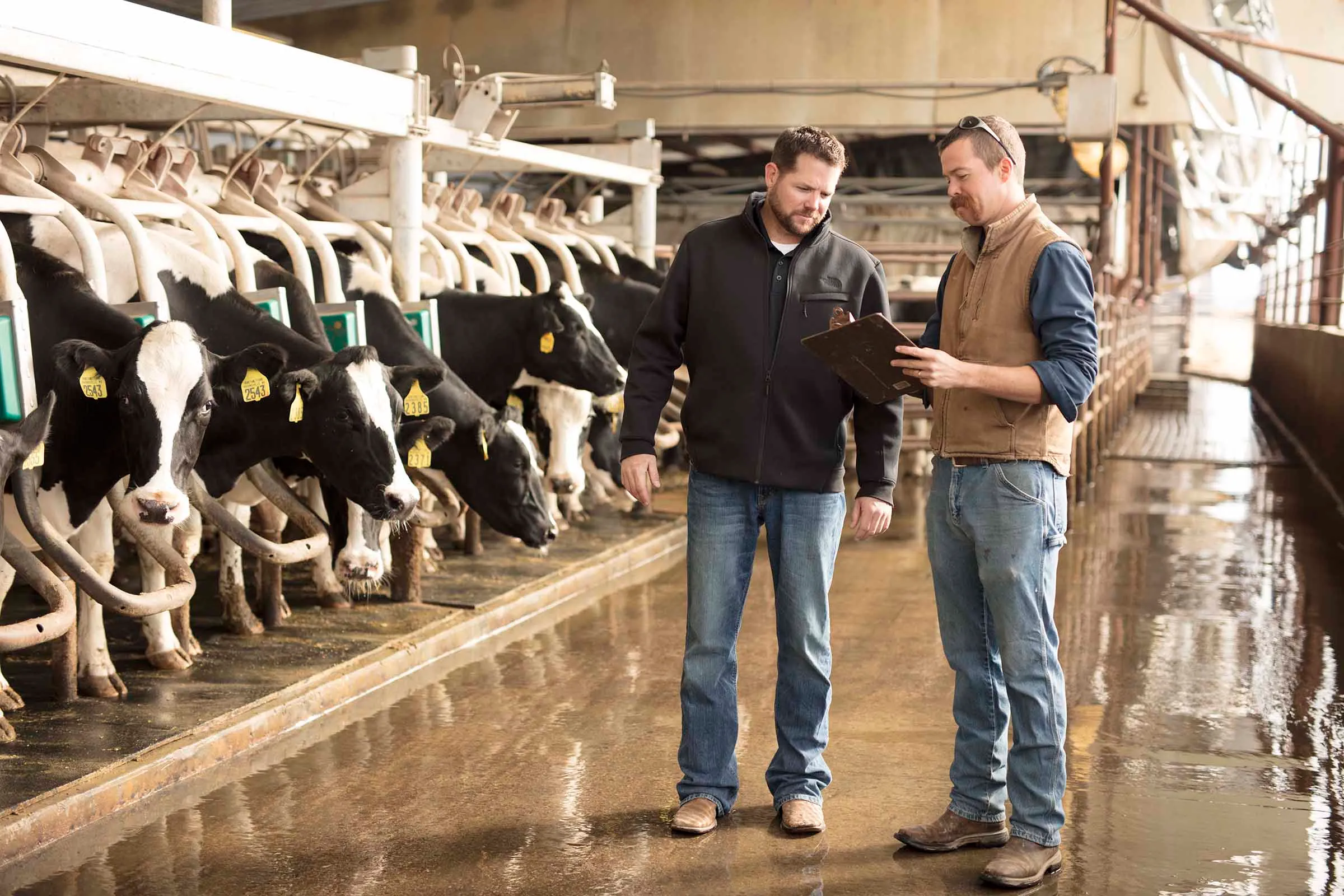
For Chad Hasbargen, owner and operator of Hasbargen Land and Cattle, running a 1,500-head backgrounding yard in northern Minnesota has long been a hands-on, 365-day-a-year job. High employee turnover and limited access to experienced labor meant Hasbargen was used to shouldering much of the daily animal health responsibilities himself. Walking pens, spotting sickness and making treatment decisions all fell to him.
Hasbargen had a hard time trusting employees with the day-to-day operations, let alone, enough to leave the farm for some much-needed rest and recuperation. But everything changed when he adopted SenseHub® Feedlot.
SenseHub Feedlot helps Hasbargen mitigate challenges common to many family-owned feedyards in rural areas. The system uses ear tags equipped with sensors to track body temperature and activity levels. Using proven algorithms, if a deviation from the ordinary is detected, an alert is sent either to a desktop or mobile device. Simultaneously, an LED light on the respective animal’s tag illuminates and flashes, so employees can spot them at a glance.
With the challenge of managing high-risk, long-haul calves — often 400–500-pound beef-on-dairy crosses from mixed sources in Kentucky and Ohio — Hasbargen needed a better way to catch illness early and confidently delegate care to less experienced workers. What he found in SenseHub Feedlot wasn’t just technology but peace of mind.
Hasbargen was doing some online reading when he came across an article for SenseHub Feedlot. After he contacted his local Merck Animal Health representative, Hasbargen’s questions were answered, the system was thoroughly explained and the system was installed at his feedyard in short order.
“We’re treating calves every single day of the year,” Hasbargen says. “Before SenseHub Feedlot, if I wasn’t personally walking the pens, I would worry that something was missed. Now, the system gives us a heads-up before a calf even looks sick.”
The difference was immediate. Within three months of installing SenseHub Feedlot, Hasbargen felt confident enough to step away from the operation for the first time in years. When his wife had a business trip to Australia, he was finally able to join her.
“I could leave knowing everything back home would be okay,” he says. “It was a game changer when we adopted SenseHub Feedlot and virtually anyone could walk pens and pull animals to evaluate.”
The system doesn’t just help identify potentially sick calves earlier; it has become a critical training tool for new workers. The blinking tags help less experienced employees learn what animals needing attention look like. This has taken pressure off Hasbargen and allowed him to focus more on managing the business than being tied to daily treatment.
“It’s hard to find labor, and we end up hiring and training a new set of workers every year,” Hasbargen explains. “The system has helped our new hires to work more independently and frees me up to run the business.”
The system has reduced their treatment costs and improved performance. “We’re not treating as many calves a second time,” he says, noting that his chronic pen, once a regular part of the operation, now sits virtually empty. With early intervention and better first-treatment efficacy, more calves stay on feed and maintain gains.
“SenseHub Feedlot has been a real game changer in reducing labor, improving treatment timing and keeping calves on a positive trajectory,” Hasbargen says. “And the support from the Merck Animal Health team has been great.”
Meet other Game Changers who are working to better their operations, ensure their legacies and improve their industry.
Disclaimer
This product is not intended to diagnose, treat, cure, or prevent any disease in animals. For the diagnosis, treatment, cure, or prevention of diseases in animals, you should consult your veterinarian. The accuracy of the data collected and presented through this product is not intended to match that of medical devices or scientific measurement devices.
 Go To United States
 Algeria
 Argentina
 Australia
 Austria
 Bahrain
 Belgium (Dutch)
 Brazil
 Canada (English)
 Chile
Chile Colombia
 Croatia
 Czech Republic
 Denmark
 Ecuador
 Egypt
Egypt Finland
 France
 Germany
 Greece
 Hungary
 India
India Indonesia
 Iraq
Iraq Ireland
 Israel
 Italy
Italy Japan
Japan Jordan
 Kuwait
 Lebanon
 Malaysia
 Mexico
 Morocco
 Netherlands
 New Zealand
 Norway
 Oman
Oman Panama
 Peru
Peru Philippines
 Poland
 Portugal
 Qatar
Qatar Romania
 Russian Federation
 Saudi Arabia
 South Africa
 South Korea
 Spain
Spain Sweden
 Switzerland (French)
 Taiwan
 Thailand
 Tunisia
 Turkey
 Ukraine
 United Arab Emirates
 United Kingdom
 Uruguay
 Yemen
Yemen Global