
Healthy Food Choices
Diet is an important part of good diabetes control. Healthy food provides nutrients while minimizing fluctuations in glucose. Good nutrition can come in various ways:
Prescription Diets – These are specially formulated for the management of cats with diabetes. They can be particularly useful for helping with weight loss. Ask your veterinarian about the best choices for your cat.
Nonprescription Diets – Diabetes can be managed on a carefully controlled program using their normal diet. It is much easier to manage these plans if a canned food with complete nutrition and correct protein source is used.
Water Consumption – Clean drinking water should be available at all times. A reduction in excessive water consumption is an indicator of successful management of diabetes.
Tips for a Healthy Diet
No matter which diet option you choose, these are the basics for diabetes control:
Consistently feed your cat the same amount of food at the same times each day to avoid unnecessary fluctuations in blood glucose. Discuss with your veterinarian if your cat prefers grazing to meal feeding.
Time feedings and insulin treatments so that glucose absorption coincides with peak action of given insulin. In general, feed half of your cat’s total daily food right before or with injections. If your cat tends to graze throughout the day, or for other specific questions regarding type, volume, timing and frequency of feedings, please consult your veterinarian.
Choose foods with a high-quality protein source that is also highly digestible (e.g., meat or eggs rather than soybean or corn gluten).
Work with your veterinarian to find the correct caloric value to help your cat achieve optimal weight.
Choose a diet that is fat-restricted and low in carbohydrates to help avoid further complications.
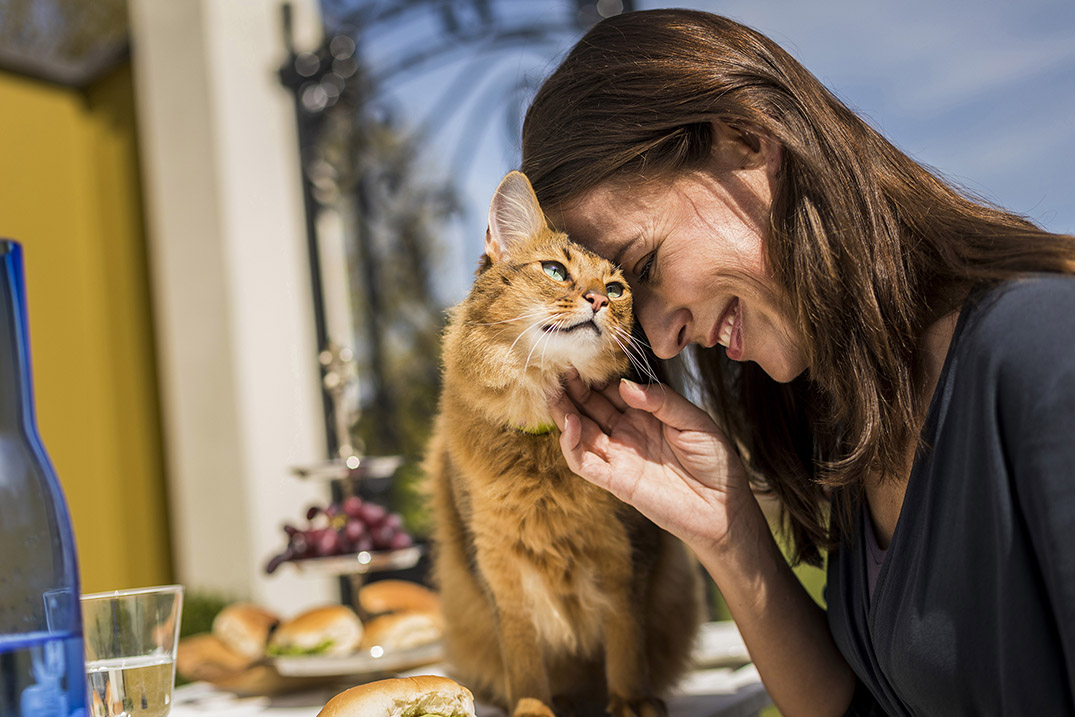
“My new diet has been the best – my pet parents found a new, tasty food for me that keeps me feeling happy and well”
–SUGAR
Importance of an Ideal Body Weight
Achieving your cat’s ideal body weight is best for diabetes management. Underweight cats should avoid high carbohydrates to best manage diabetes.
Overweight cats can have insulin resistance, which may lead to higher doses being required. With weight loss, you cat may develop lower insulin requirements. Your veterinarian can help you calculate the ideal body weight and food requirements if your cat needs to lose weight, as well as advise on future adjustments in insulin dosage.
Tracking Results
Recording your cat’s results is important to properly manage care.
Tracking Tools & Resources
- Pet Diabetes Tracker app
Review and keep important information to manage care. - Blood Glucose Curve Tool
Easily record blood glucose readings to generate a blood glucose curve. - Helpful Downloads
Additional resources to understand and manage canine diabetes.
Talk to Your Vet Today
Find a veterinarian to learn more about pet diabetes, and how cats and dogs can lead a happy, healthy life with proper management.
Find a vet near meImportant Safety Information
VETSULIN® and VETPEN® are for use in animals only. Dogs and cats known to have an allergy to pork or pork products should not be treated with VETSULIN®. VETSULIN® is contraindicated during periods of hypoglycemia. Animals with severe ketoacidosis, anorexia, lethargy, and/or vomiting should be stabilized with short-acting insulin and appropriate supportive therapy before use. As with all insulin products, careful patient monitoring for hypoglycemia and hyperglycemia is essential. Overdosage can result in profound hypoglycemia and death. Progestogen and glucocorticoid use should be avoided. The safety and effectiveness of VETSULIN® in puppies, kittens, breeding, pregnant, and lactating dogs and cats has not been evaluated. Keep out of reach of children. Avoid contact with eyes. In case of contact, immediately flush eyes with copious amounts of water for at least 15 minutes. Accidental injection may cause clinical hypoglycemia. In case of accidental injection, seek medical attention immediately. Exposure to the product may induce a local or systemic allergic reaction in sensitized individuals. For complete safety information, refer to the product label.


 Go To United States
 Algeria
 Argentina
 Australia
 Austria
 Bahrain
 Belgium (Dutch)
 Brazil
 Canada (English)
 Chile
Chile Colombia
 Croatia
 Czech Republic
 Denmark
 Ecuador
 Egypt
Egypt Finland
 France
 Germany
 Greece
 Hungary
 India
India Indonesia
 Iraq
Iraq Ireland
 Israel
 Italy
Italy Japan
Japan Jordan
 Kuwait
 Lebanon
 Malaysia
 Mexico
 Morocco
 Netherlands
 New Zealand
 Norway
 Oman
Oman Panama
 Peru
Peru Philippines
 Poland
 Portugal
 Qatar
Qatar Romania
 Russian Federation
 Saudi Arabia
 South Africa
 South Korea
 Spain
Spain Sweden
 Switzerland (French)
 Taiwan
 Thailand
 Tunisia
 Turkey
 Ukraine
 United Arab Emirates
 United Kingdom
 Uruguay
 Yemen
Yemen Global